
AI hybrid production: real talent, an AI-made set
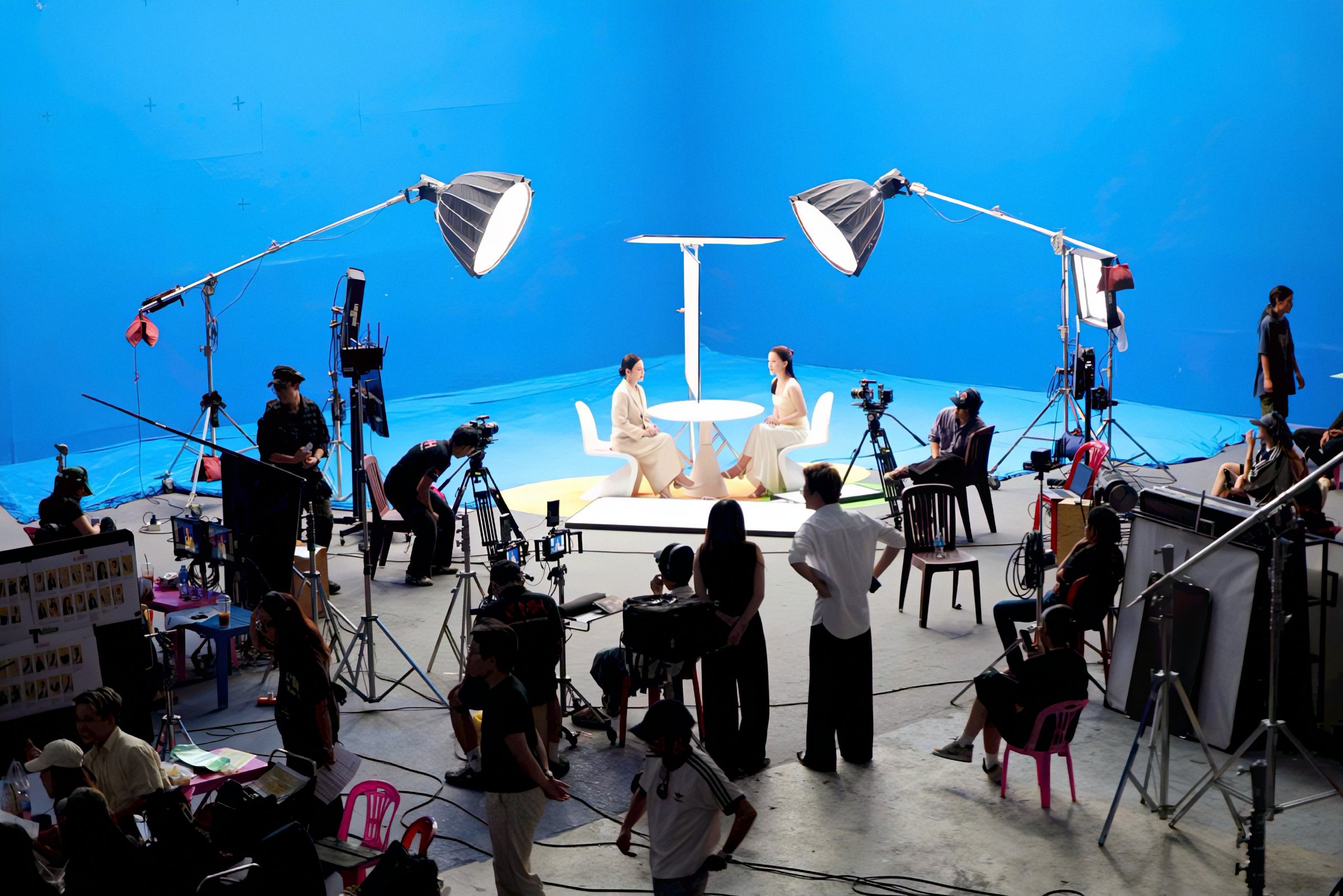
An AI hybrid shoot films the people for real and makes the room with AI. The talent, the table and the product are in front of a real camera. The set behind them is never built. It is generated, then composited behind the take, and the graphics go on top.
We used it for episode 3 of a talk-show series for ENAT, a vitamin E skincare brand. Two hosts at a round table, shot in a blue-screen studio. In the final they sit in a warm cream and gold studio that does not exist.
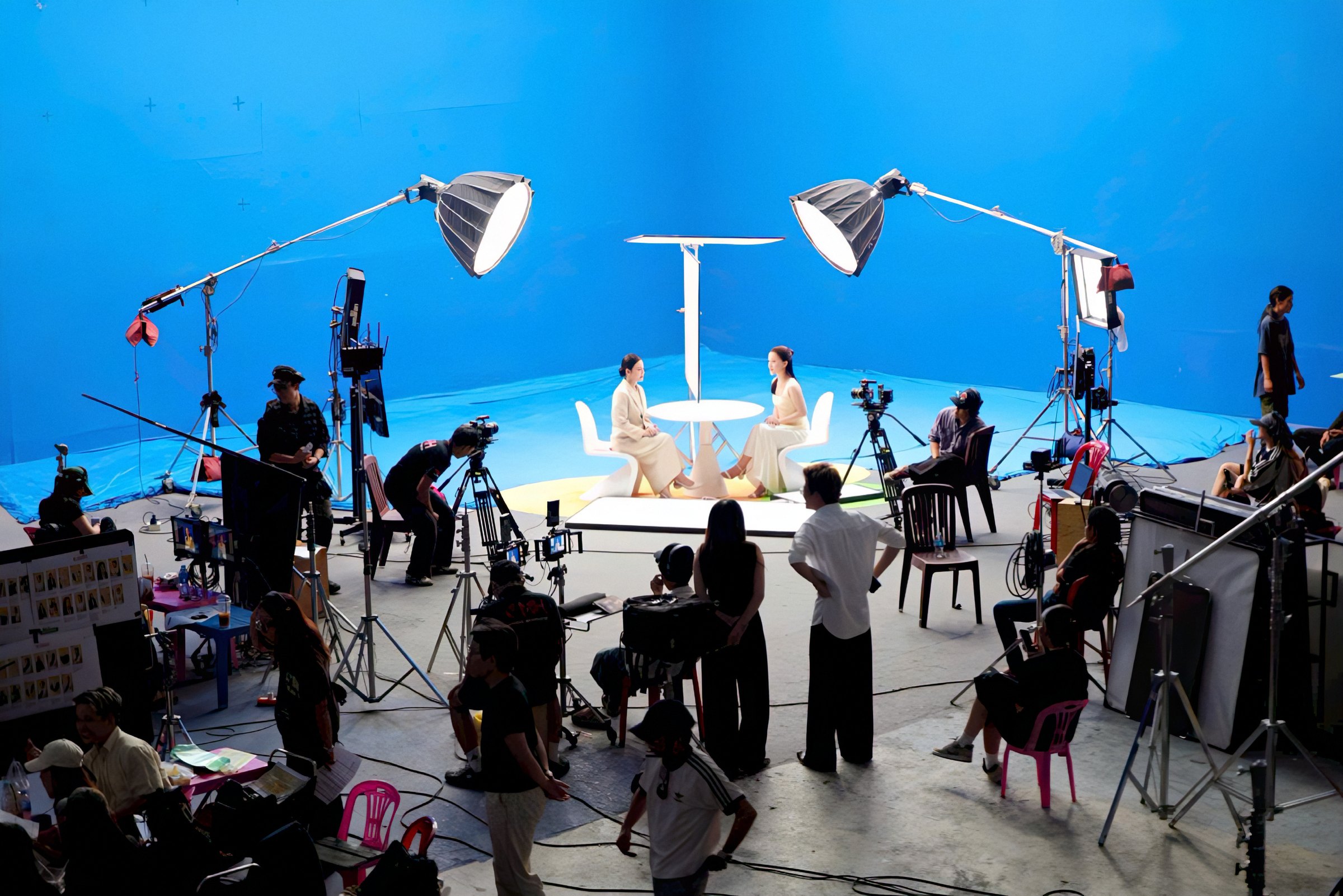
The whole set for ENAT episode 3. Everything in this picture is real. Only the blue behind the table was replaced.
What is real and what is made
It is easy to hear "AI" and picture a film with no shoot. This is the opposite. The shoot was a normal studio day: a full crew, softboxes, more than one camera, hair and make-up, and two hosts giving a real performance.
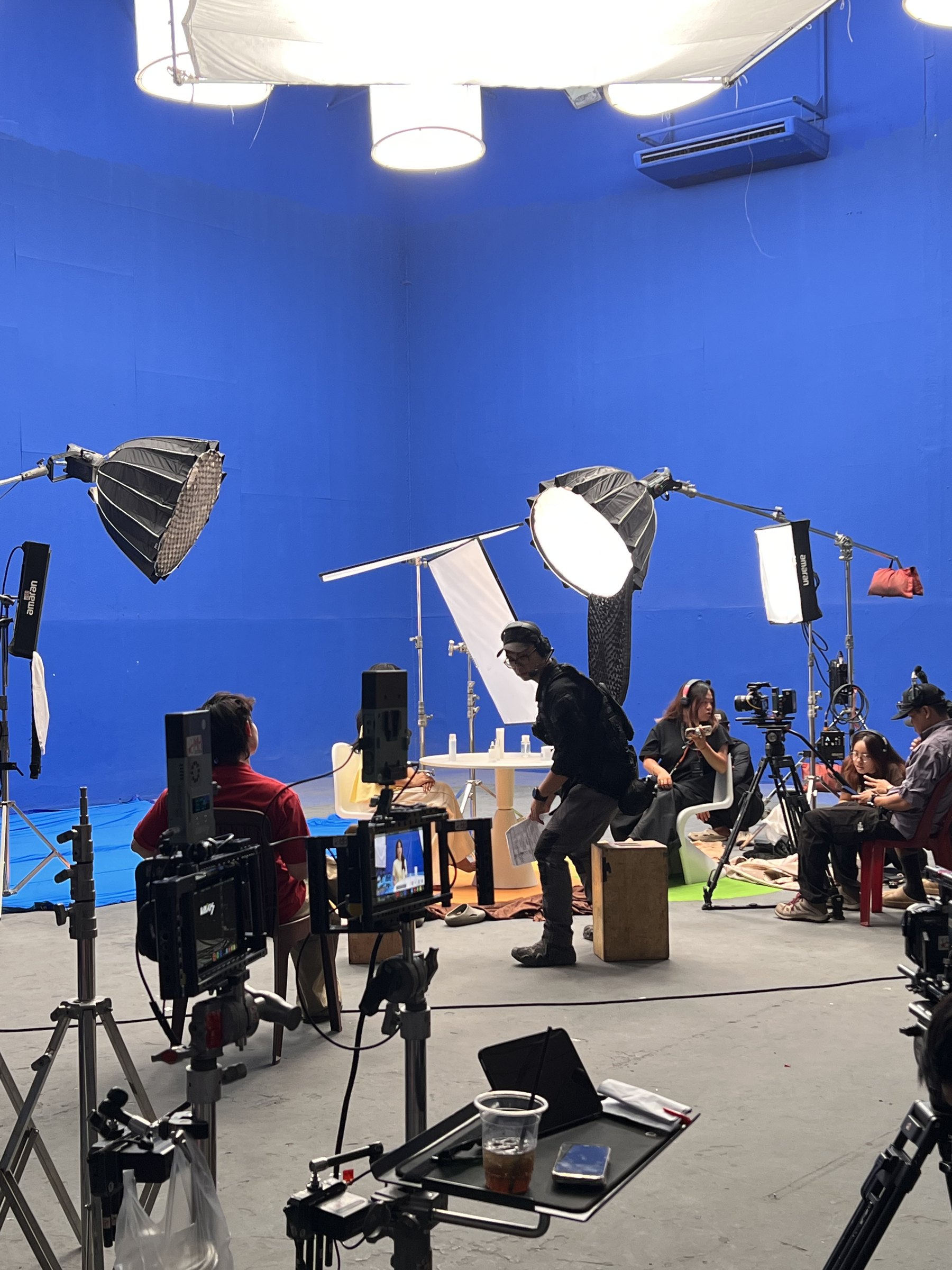
Lighting the set before the hosts sit down. Softboxes, bounce boards and a bare blue floor.
On set, the white table, the chairs and the products were all physical. The hosts touch them and lean on them. Only the room behind them was replaced.
That split is the point. Faces, skin, hands and product are what viewers judge in an instant, and skincare buyers judge skin hardest of all. Those stay filmed. The wall, the shelves and the light in the distance are what AI is allowed to make. We set out the wider choice in CGI vs live action vs AI.
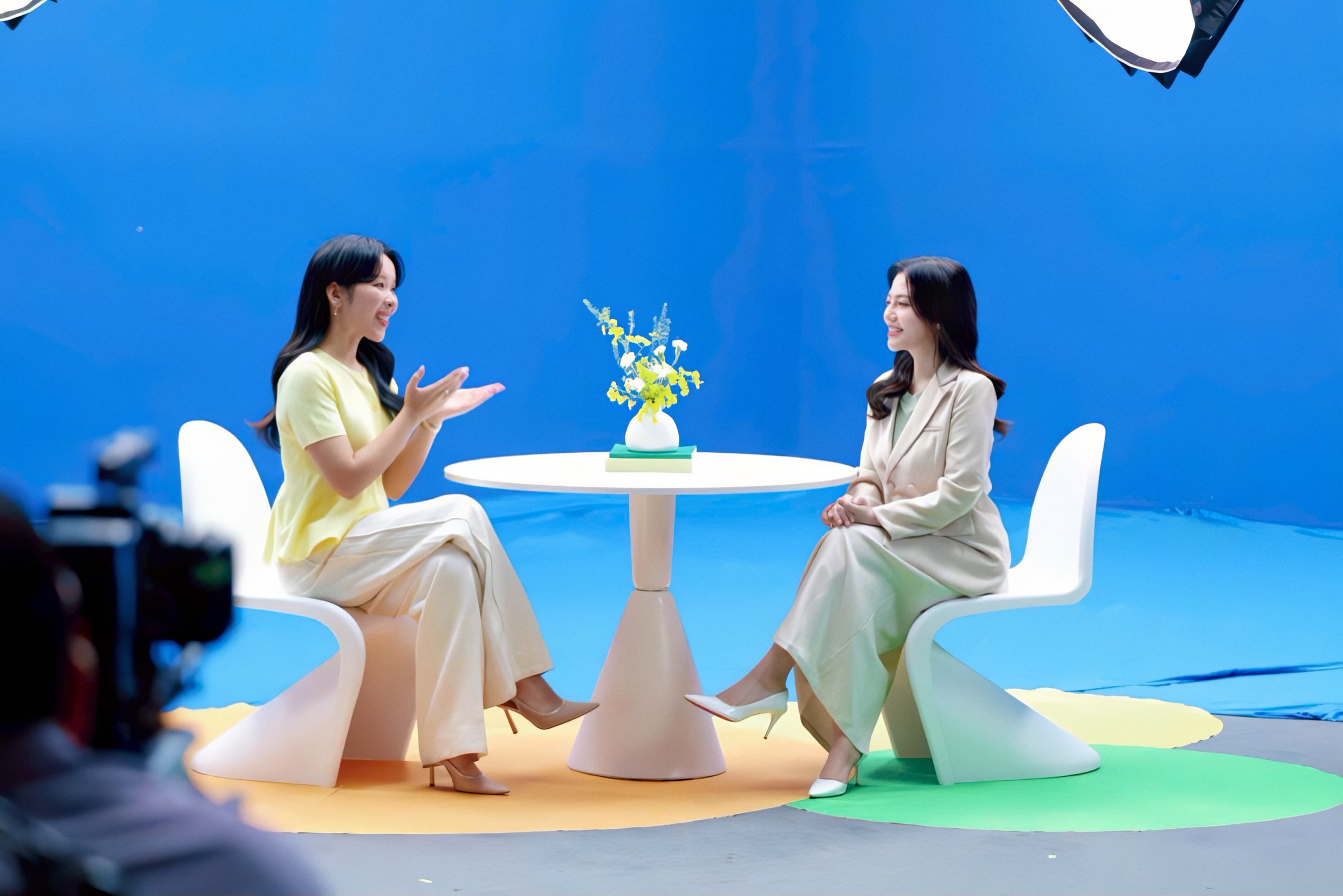
The hosts at the real table, with the real products. The blue is the only part of the frame that changes.
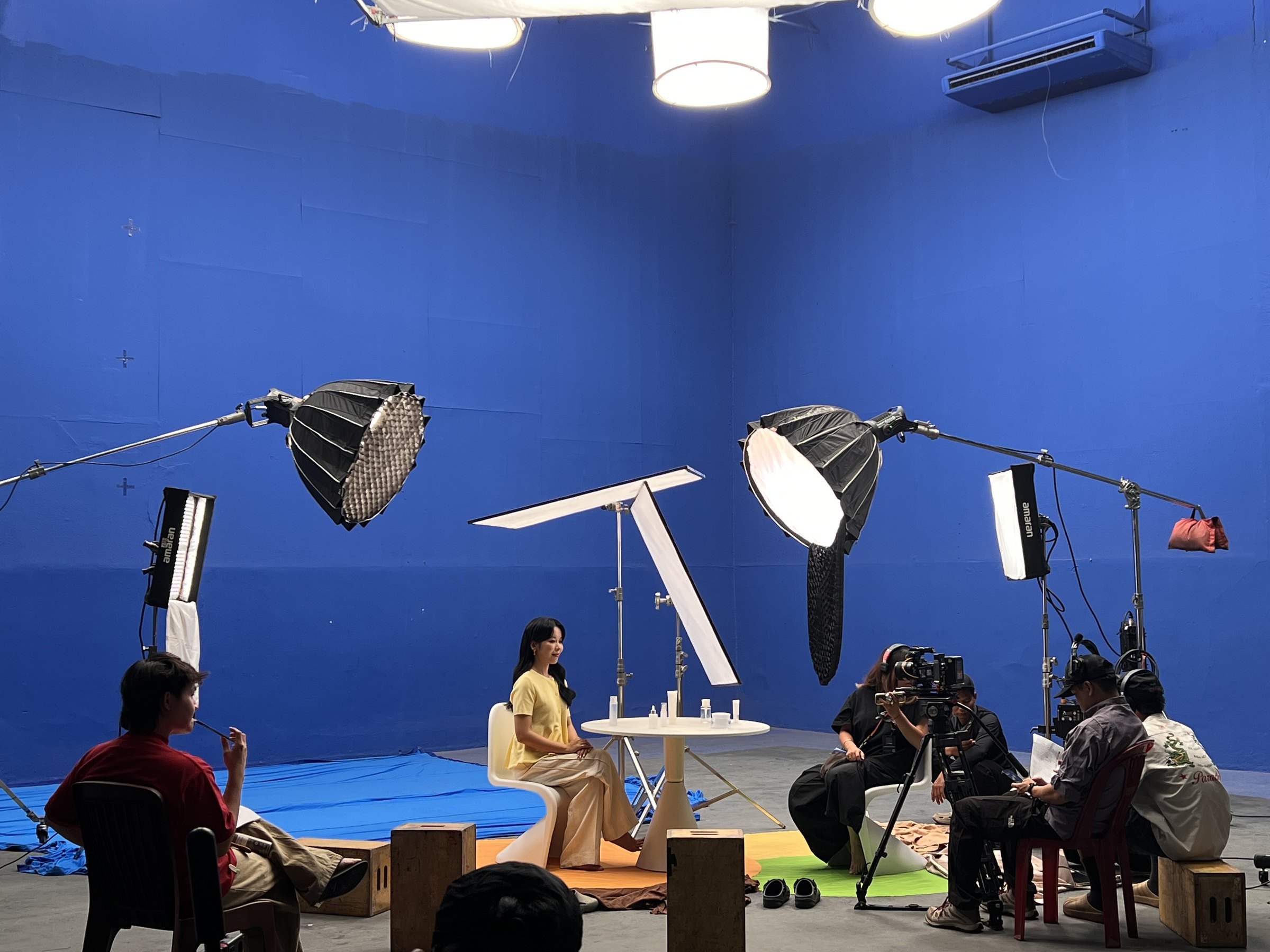
The same set from the back of the studio. Everything around the table is crew, light and blue.
How the background is made
The room was generated with AI.
The order matters. The room should be designed first, so that its light has a direction: where the window glow is, which side is warmer, how bright the back wall sits against the hosts. Then the studio can be lit to match it. If the room is made after the shoot, the light on the hosts and the light in the room will disagree, and no amount of grading fully fixes that.
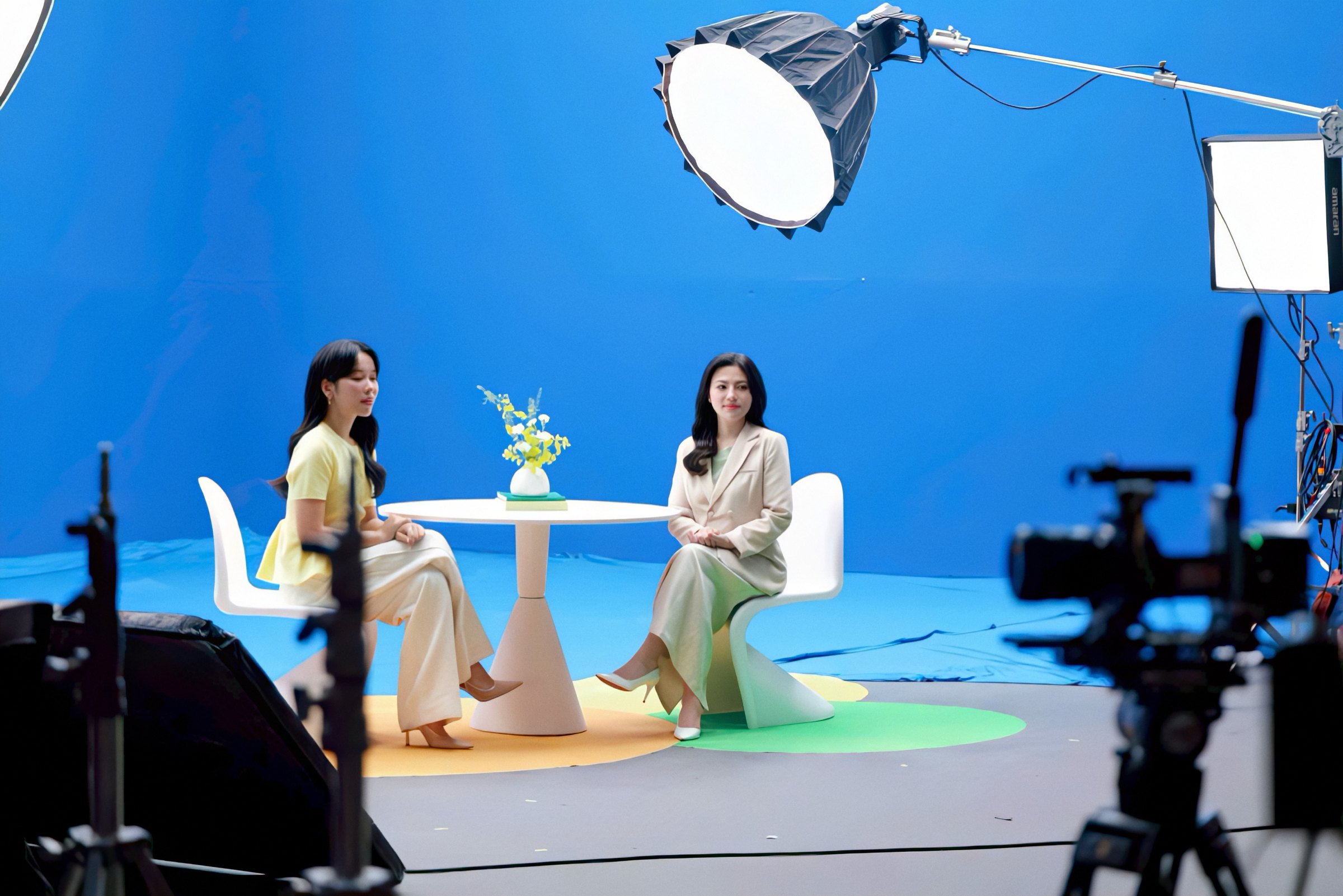
Softboxes above the table. On a blue-screen set, the light on the hosts has to agree with a room that is not there yet.
On the day, the director blocks the hosts against marks that stand for things the audience will see later but nobody on set can.
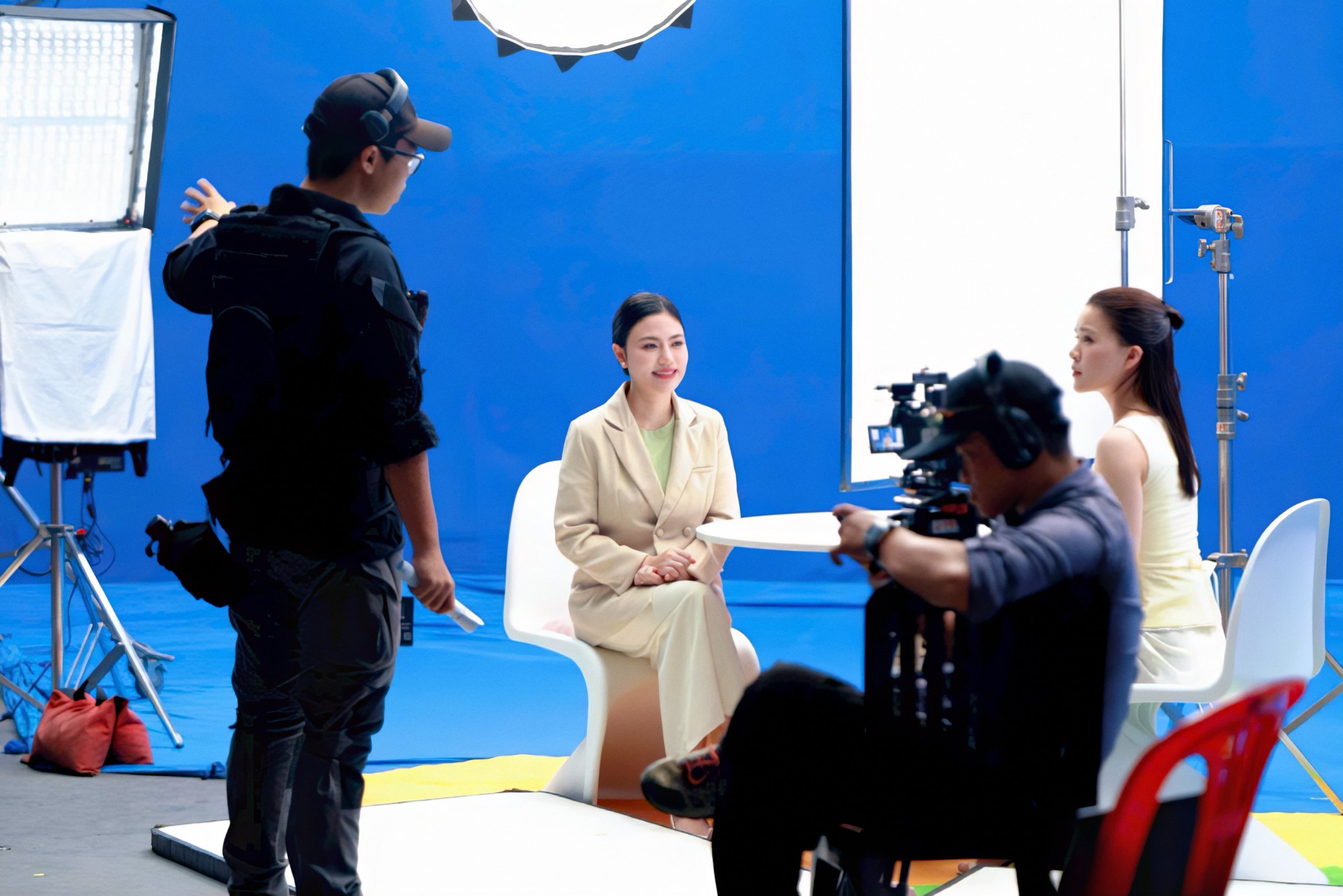
Blocking on blue. The director places the host in a room that is not there yet.
Plate, matte, background, comp
After the shoot the take goes through four layers:
Plate. The original take, hosts and table on blue.
Matte. The key that separates the people and props from the blue.
Background. The AI room, placed and scaled to the camera's view.
Comp. All of it together, with colour matched across the join.
Then the motion graphics go on top. In episode 3 that includes a "9h tối" card and a gold podium packshot for the product.
Post at Dream Media is one in-house editor who also handles motion graphics and compositing. A talk show with a locked camera and a single generated room sits inside that. Heavy CGI goes to our partners, and we say so in the quote.
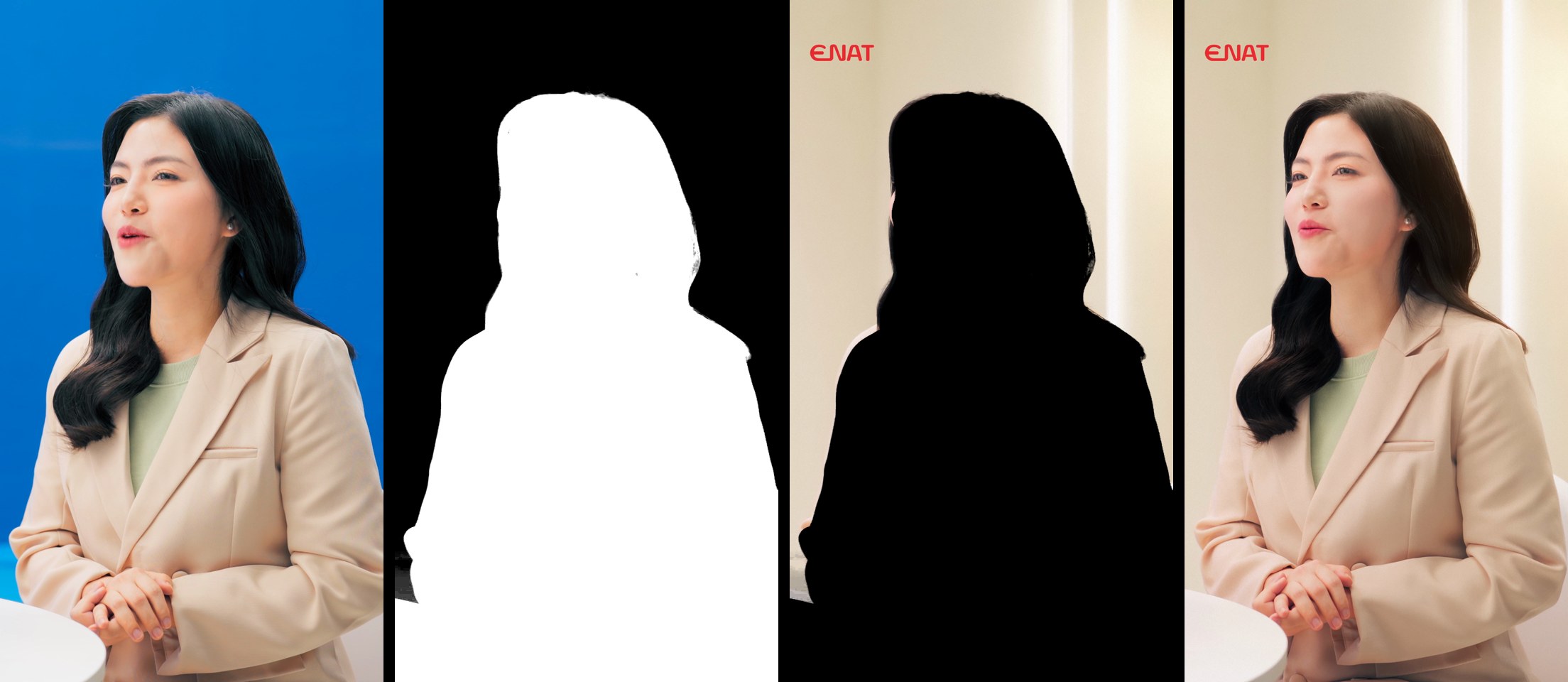
One frame, four layers. The plate and the matte come from the shoot. The room is generated. The comp puts them together.
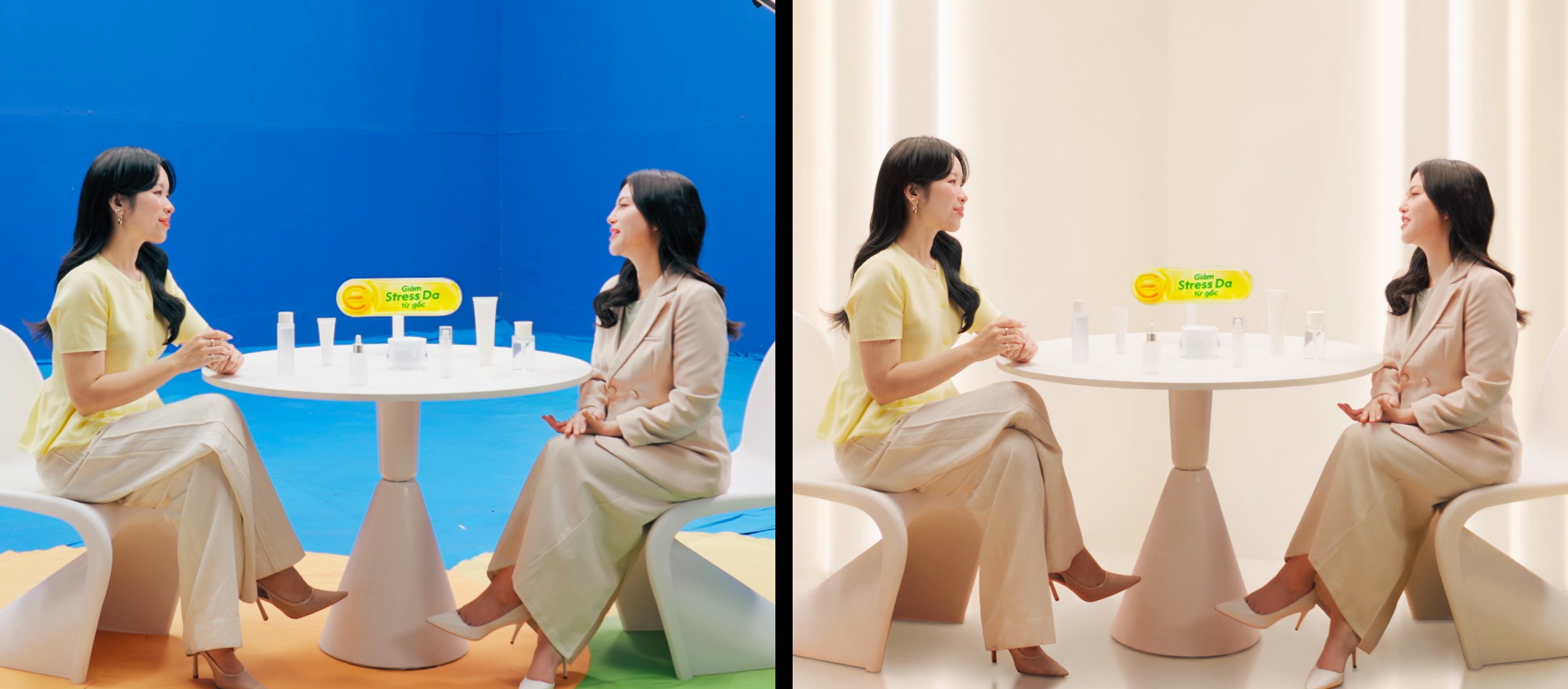
The same take, frame for frame. Left is what the camera saw. Right is what went out.
Three more angles, before and after
The same comparison on three more shots from episode 3: a medium shot of each host and the wide. In every pair the left frame is the plate from the camera and the right is the finished episode.
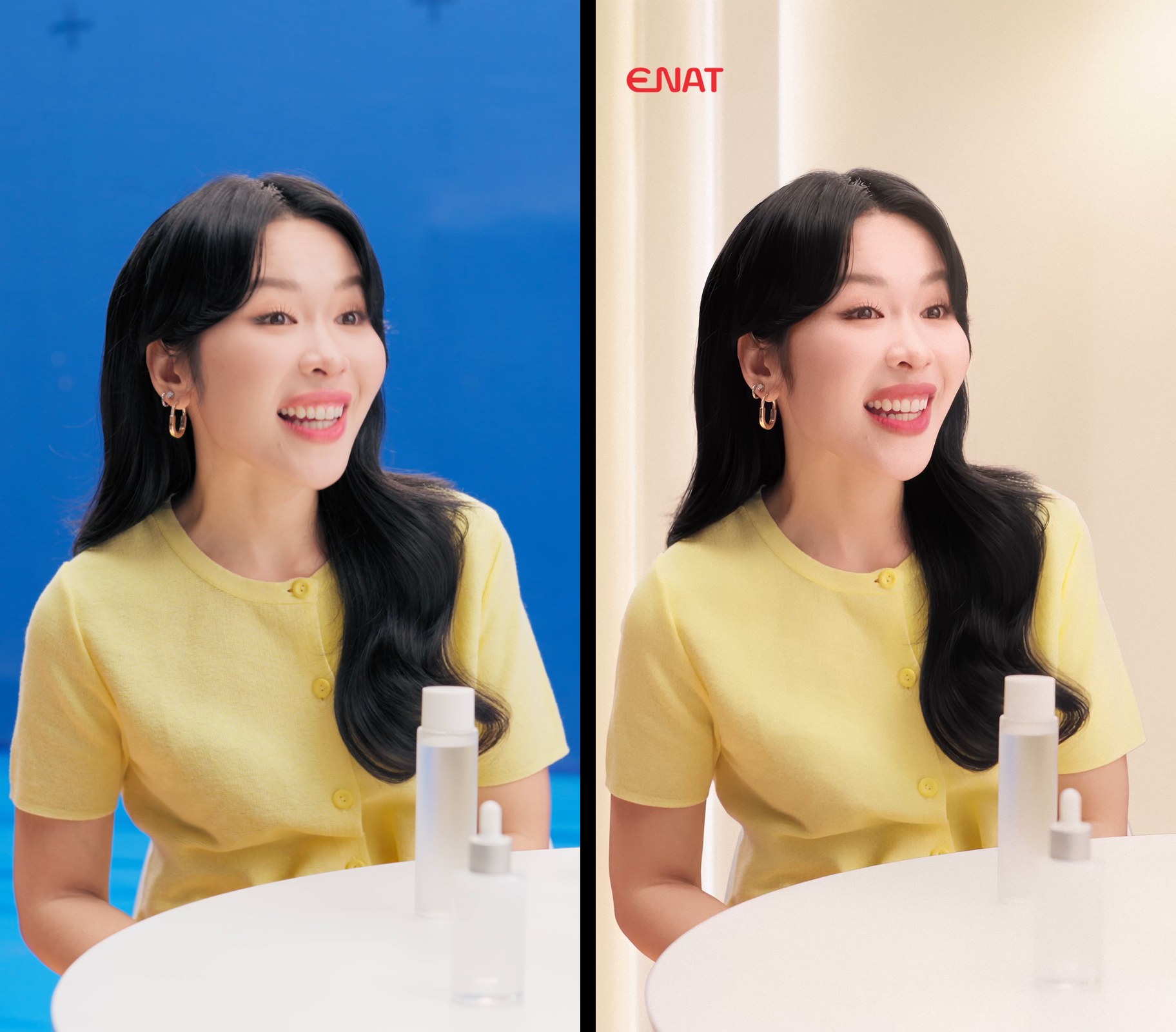
Medium shot, the host in yellow. Hair, earrings and the bottles on the table come from the plate. The room behind her is generated.
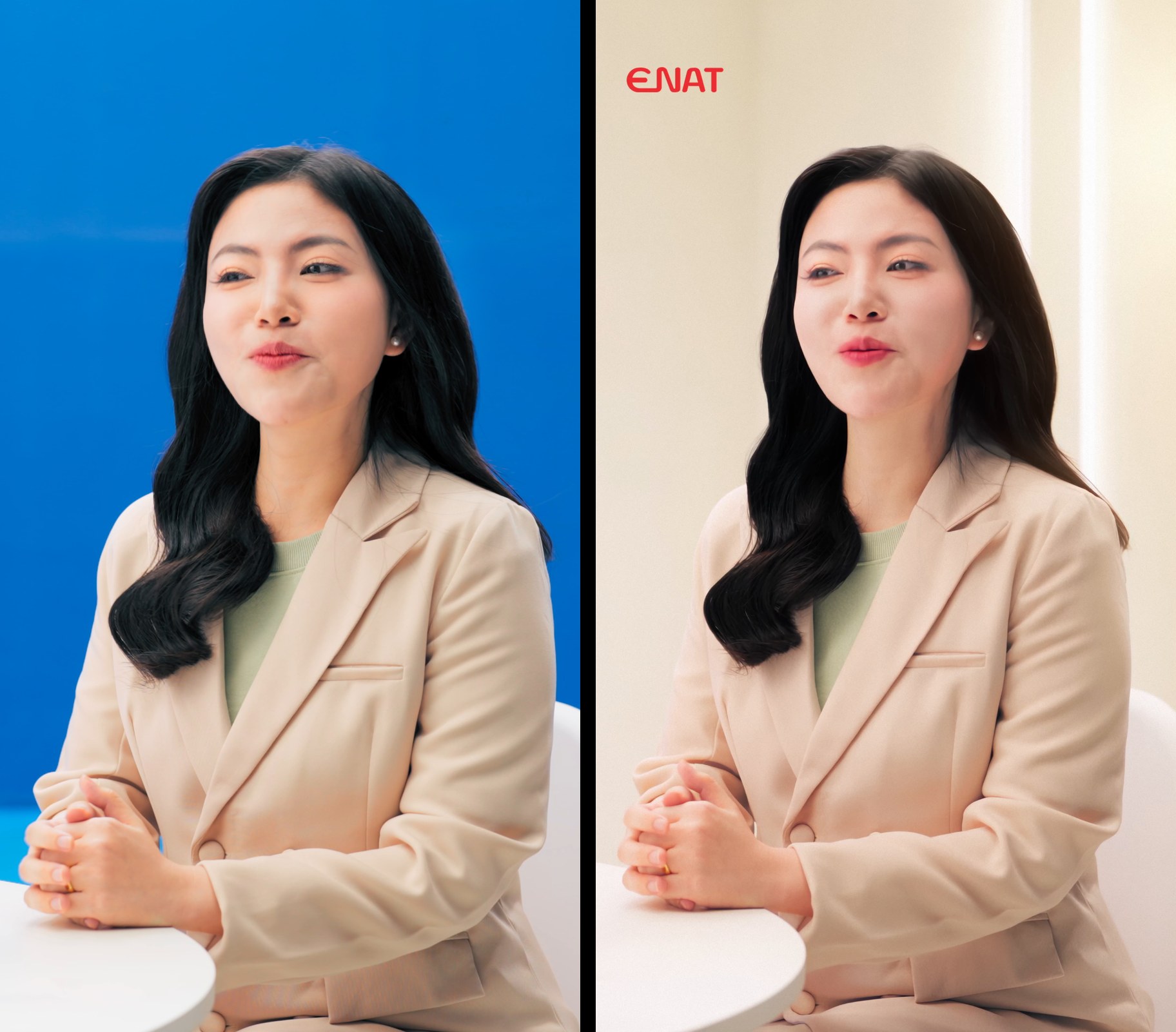
Medium shot, the host in beige. Same take, same light on the face. Only the back wall changed.
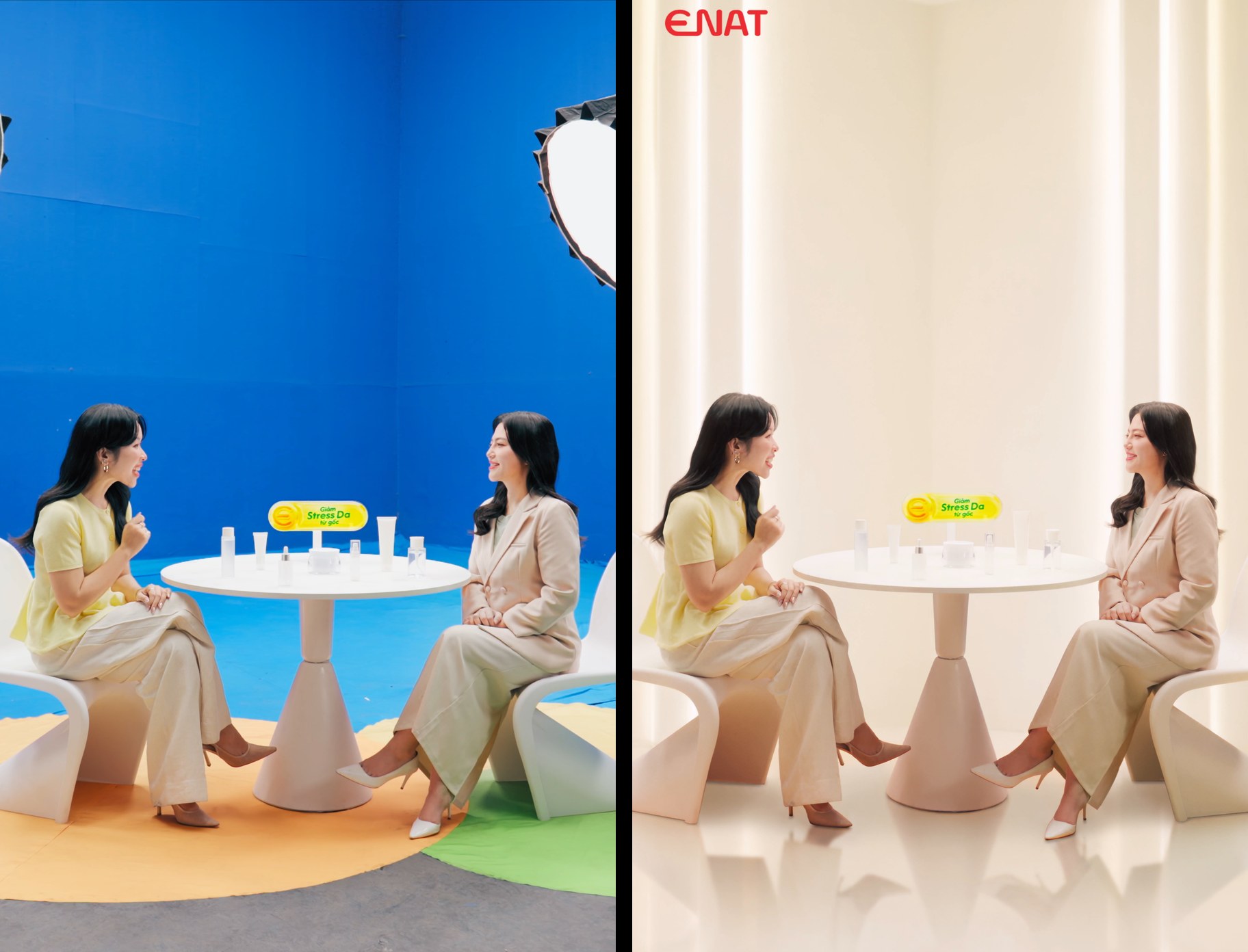
The wide. The table, chairs and products are real. The walls, the floor and the light in the room are not.
What it is good for
Series. One studio setup can serve many episodes. The room is made once and reused, so episode 8 looks like episode 1.
Changing the set without a reshoot. A seasonal version, a new colour for a new product line, a different room for a different market. The hosts stay the same take.
Brand look. The room can be designed to the brand's palette, down to the colour of the shelves. For ENAT that was cream and gold, close to the pack.
No build, no strike. There is no set to construct, store or throw away.
Where it breaks
A wide, moving camera. A locked or gently moving camera suits a generated background. A crane move or a handheld walk around the table needs the room to move in true perspective, which is a 3D job, not a single generated image.
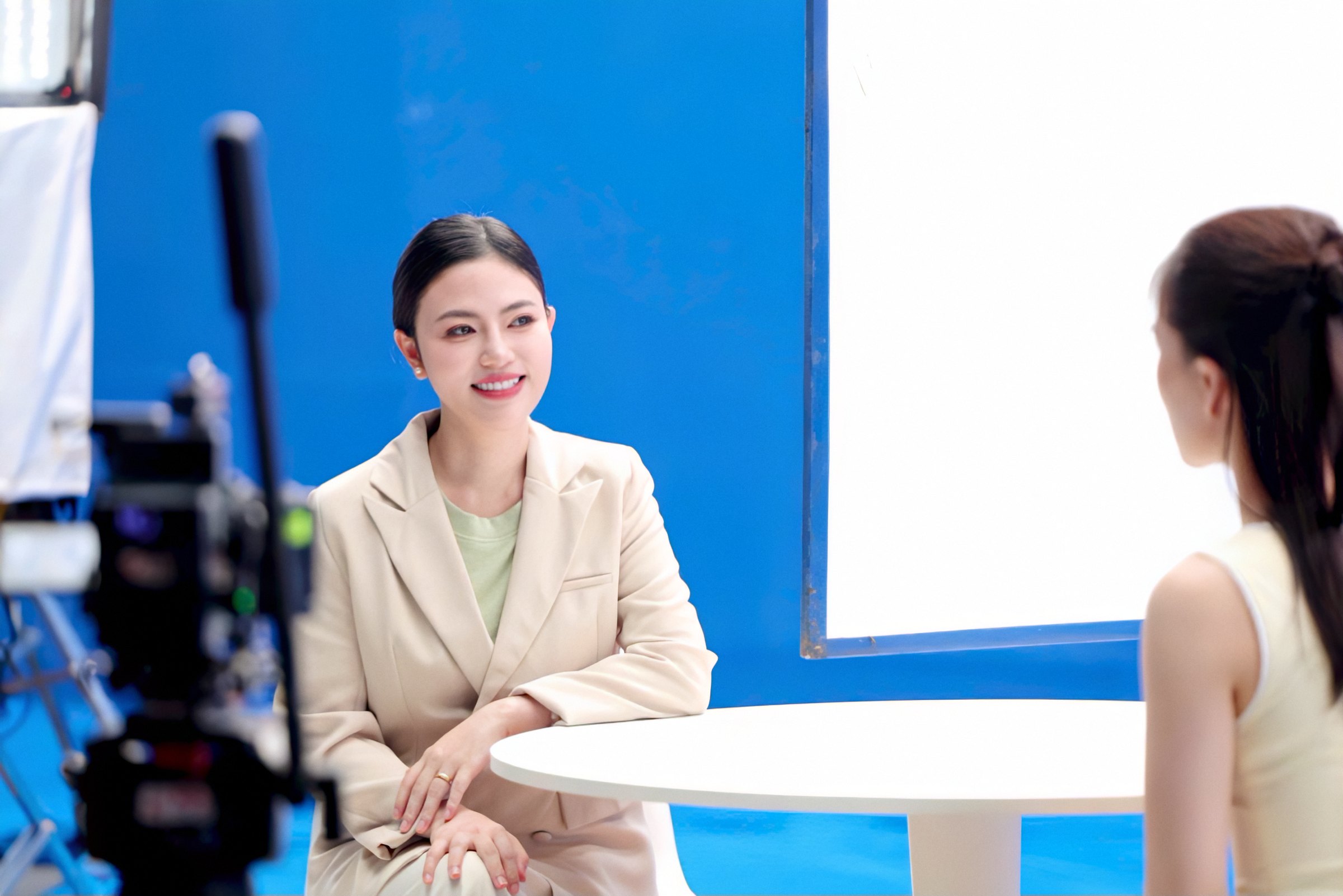
A locked camera on the host. Simple moves keep a generated room believable.
Hair. Fine, flyaway hair against blue is the hardest edge to key. It is why hair and make-up on a blue-screen day is also a matte job.
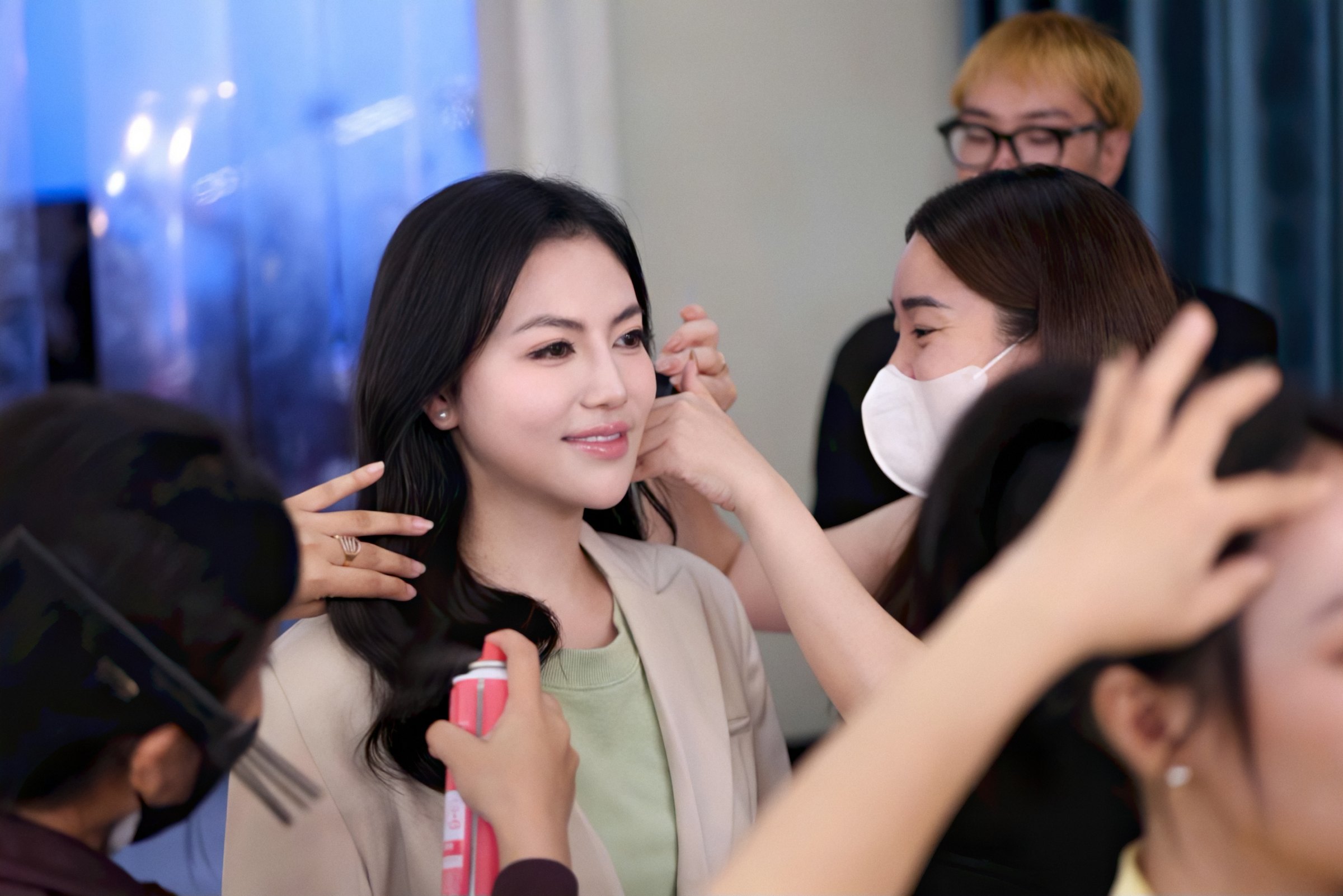
Hair and make-up before a take. Smooth hair keys clean; loose strands against the blue are where comps go soft.
Reflections and spill. Glossy packs and glass reflect the blue. White props pick it up too, and our table was white. The fixes are distance from the screen, careful flagging, and clean-up in post, and each one has to be planned.
Light decided late. If nobody has agreed the room before the shoot, the studio is lit blind. Light direction belongs in the pre-production meeting, with the AI room on the table.
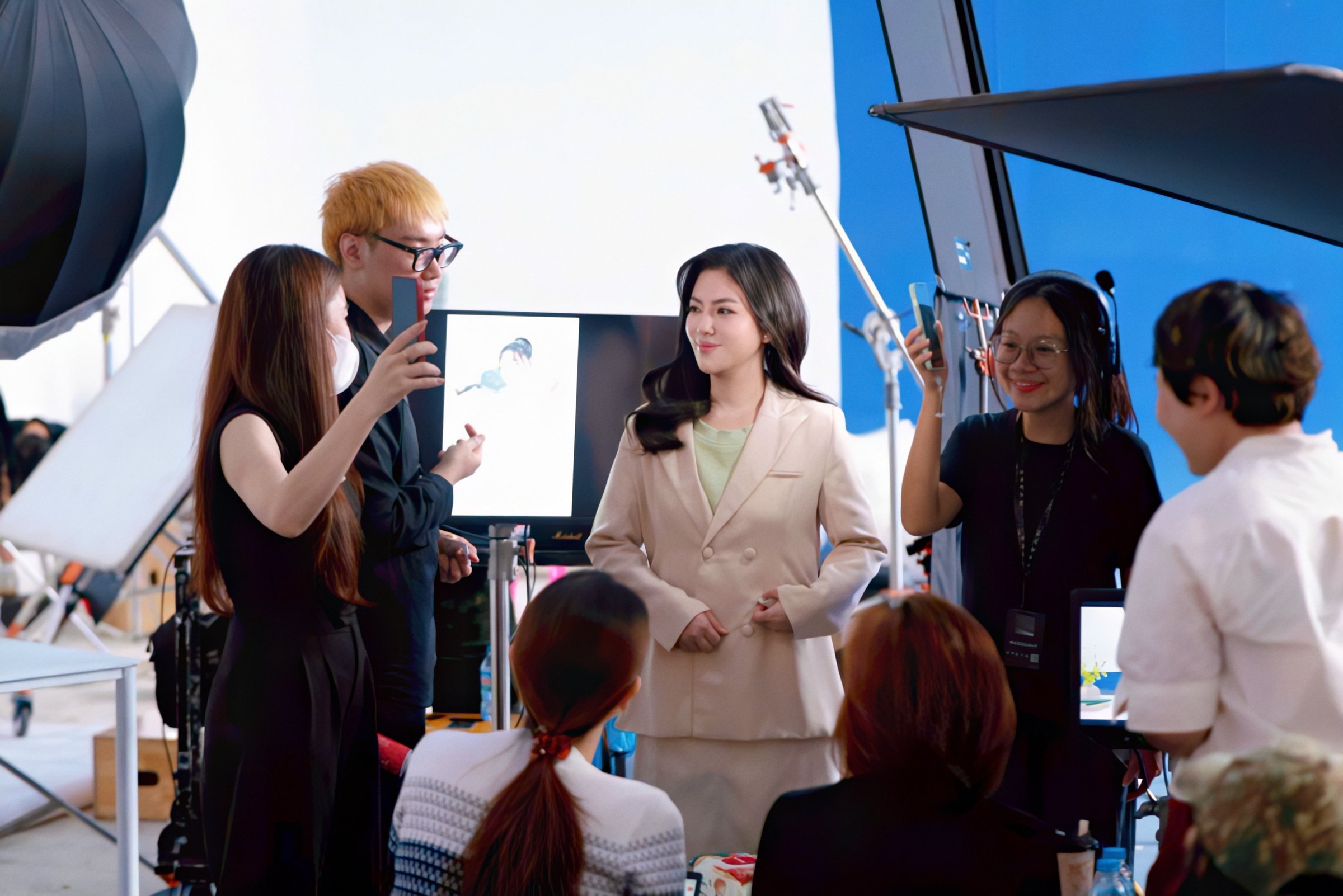
Checking hair and wardrobe on set before a take.
Approval after the shoot. If the client sees the room for the first time in the edit and wants a different one, the light on the hosts may no longer fit. The room should be signed off before the shoot day, like a set design.
Before you book the studio
Lock the AI room, or at least its light direction and palette, before the shoot. Get the client's sign-off on it.
Keep the camera moves simple, or budget a 3D background for the shots that move.
Plan for spill: distance from the screen, matte finishes on props where you can.
Test the key on the real hosts' hair, in wardrobe, before the day.
List every cut and ratio the series needs, because the room has to work in each frame. See video deliverables.
Ask for the background, the compositing and the graphics as separate lines in the quote.
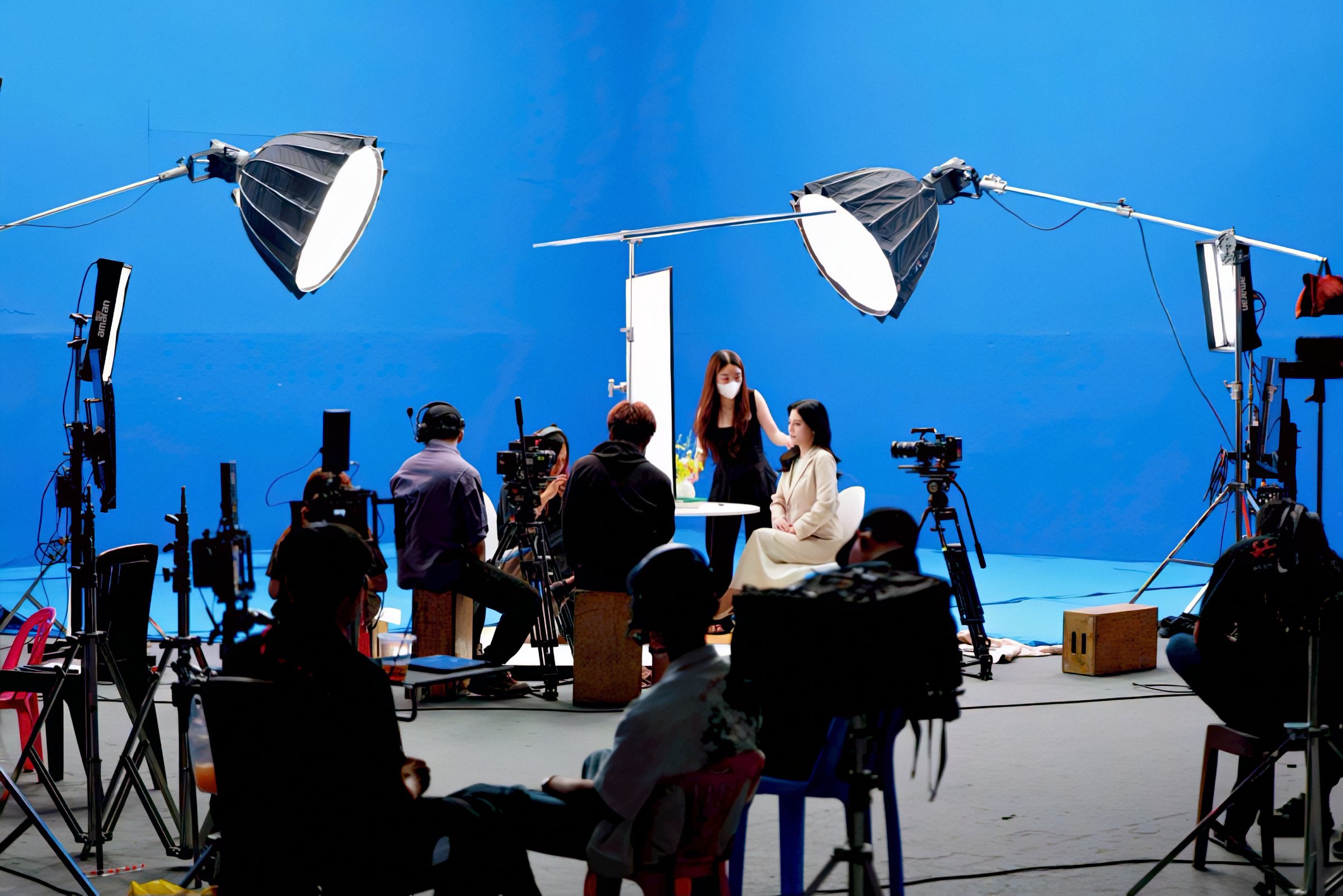
At the monitors on set. The camera sees blue; the room is judged later, in the comp.
Quick answers
Is an AI hybrid shoot cheaper than building a set?
It removes the build, but adds the background design, the keying and the compositing. Whether it costs less depends on how many episodes share the room and what set it replaces.
Can AI replace the talent too?
It can make people, but for skin, faces and performance on a skincare brand we film real people. That is where viewers notice.
Do we need a big VFX team?
Not for a locked-off talk show with one room. Big camera moves and 3D environments do need one, and that is where partners come in.
Dream Media shoots and finishes brand films and series in-house in Ho Chi Minh City, with AI where it earns its place. See AI work.